Improve Photo Quality with AI
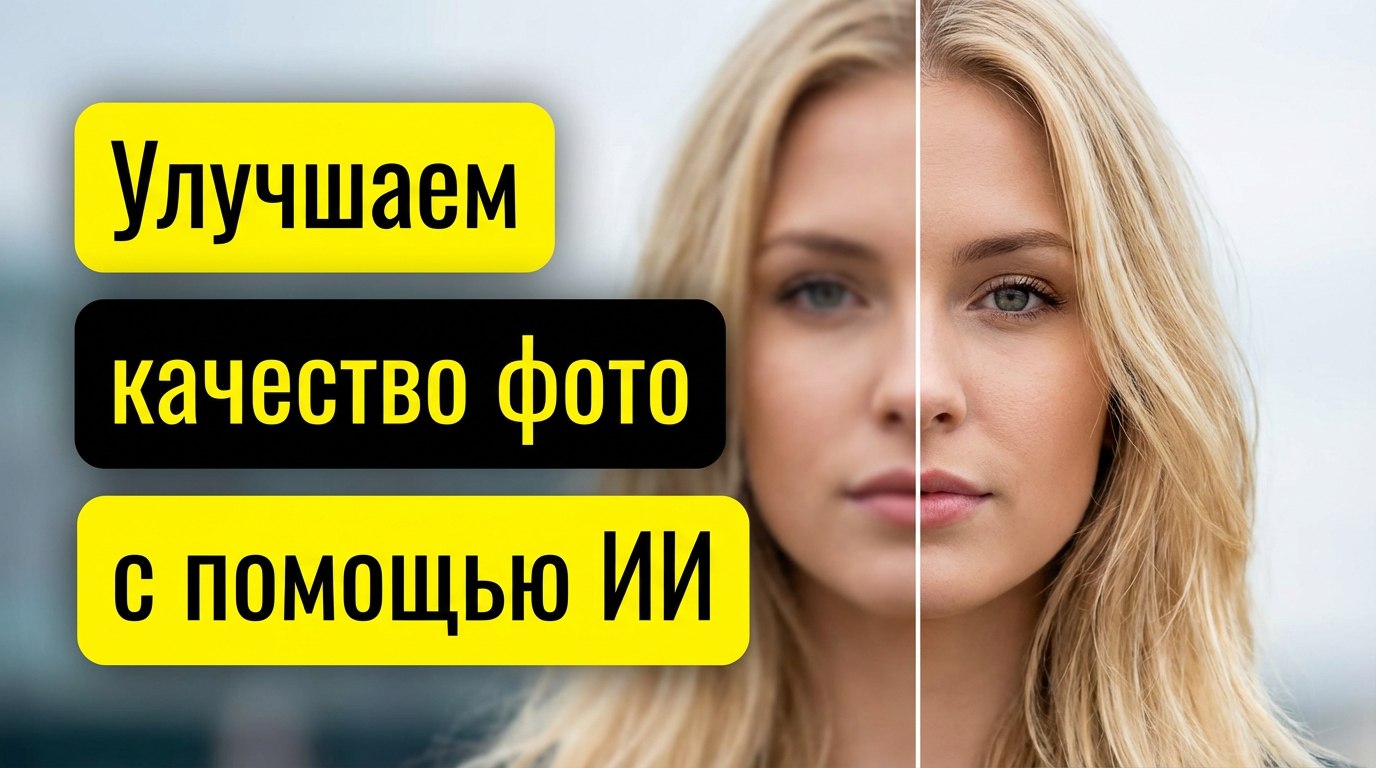
Improving Photo Quality with Artificial Intelligence
In recent years, artificial intelligence (AI) technologies have fundamentally changed the approach to image processing. While previously improving a photo required professional skills in graphic editors, today it's enough to upload an image to a special service — and the neural network will automatically enhance its clarity, detail, and overall quality.
What is AI Photo Enhancement?
AI-powered image quality enhancement is the automatic processing of a photograph using machine learning algorithms. Such systems are trained on millions of images and "understand" what a clear and high-quality photograph should look like.
Unlike ordinary filters, AI doesn't just boost sharpness or contrast. It analyzes the content of the image: faces, textures, background, lighting — and corrects each element separately.
What Problems Does AI Solve?
- Resolution enhancement (enlarging photos without quality loss)
- Blur removal
- Increased sharpness and detail
- Brightening dark images
- Improved color reproduction
- Noise and compression artifact removal
- Making faces clearer and more natural
This is especially useful for old photographs, shots from poor cameras, screenshots, or low-quality images from the internet.
How Does the Technology Work?
Most modern services use neural networks — models inspired by the human brain. They are trained on vast datasets where they "see" examples of high-quality and low-quality images.
After training, the model is capable of:
- Identifying problematic areas in a photo.
- Restoring missing details.
- Increasing resolution without noticeable pixelation.
- Making the image more realistic.
For example, when enlarging, a regular algorithm simply stretches pixels, which leads to a blurry and pixelated result, whereas AI intelligently reconstructs missing information.