What AI Can Do, and What's Better Done by Hand
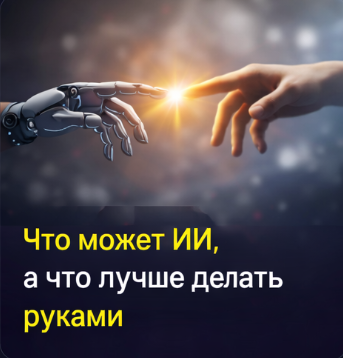
What AI Can Do, and What's Better Done by Hand
Artificial intelligence is rapidly changing the ways content is created — from images and videos to music and texts. However, despite its immense capabilities, AI still has its limitations. In this article, we'll explore which tasks AI performs best and where human creative input remains indispensable.
1. What AI Does Best
-
Generating a Large Number of Variations
AI can create dozens of image or video variations in a matter of minutes. This is especially useful for:
- concept art
- quick sketches of characters or landscapes
- visualizing ideas for marketing and advertising
Example: With VeonGen.ai, you can get several styles of the same character or scene in a couple of minutes, which would take hours to do manually.
-
Experimenting with Styles and Visual Effects
AI easily mimics famous artistic styles, creating abstract or surreal works that are difficult to reproduce manually.
-
Automating Routine Tasks
- correcting background details
- removing objects
- generating textures and patterns
AI saves time and effort, allowing you to focus on creative solutions.
2. Where Humans Are Still Indispensable
-
Subtle Artistic Concept and Meaning
AI can beautifully generate an image, but it often doesn't understand the concept or emotion you want to convey. Creating a deep visual story, plot, or unique idea is best entrusted to a human.
-
Quality Control and Details
AI sometimes makes mistakes:
- disproportionate hands and faces
- strange textures
- unnatural lighting
Humans are better at noticing these nuances and correcting them.
-
Personalization and Unique Style
Your individual handwriting, drawing style, or brand aesthetic is something AI is not yet capable of fully replicating.
3. The Ideal Synthesis: AI + Human
In practice, the most effective approach is to combine the capabilities of AI and human craftsmanship:
- Idea and concept — created by a human.
- Quick variations and stylization — generated by AI.
- Final refinement and quality — controlled by a human again.
Example: A designer creates the overall composition of a scene, AI generates several lighting and texture variations, and then the designer refines the details, adding unique elements.
With VeonGen.ai, such a workflow is particularly convenient: the platform allows you to quickly test ideas, immediately see multiple options, and save the best ones for further manual refinement.
4. Practical Tips
- Use AI for ideas and quick prototypes, but don't rely on it for the final result.
- Save your best prompts and settings — this speeds up the repeated creation of quality content.
- Combine multiple generations — sometimes a combination of variations yields the best result.
- Remember that AI does not replace creative thinking, but merely expands the toolkit.
Conclusion
Today, AI can significantly accelerate the creation of visual content, assist with experiments, and handle routine tasks. However, creative concept, attention to detail, and unique style remain the prerogative of humans.
The ideal result is achieved when AI acts as an assistant, and a human manages the process, creating harmonious and high-quality work. Use the capabilities of VeonGen.ai for idea generation, and leave the final refinement to your hands and eyes.